Spain does not give up its most beautiful places easily. They arrive slowly: on a winding road into the Andalusian hills, in the granite stillness of a Galician waterfront at low tide, in the medieval hush of a Castilian cathedral city at dusk. The prettiest towns in Spain are not simply scenic backdrops. They are places with their own rhythm, their own architecture, their own particular quality of light.
What makes the country so endlessly rewarding is that every region speaks a different visual language. The whitewashed drama of Andalusia. The slate and granite of Atlantic Galicia. The bold ochres of Aragonese rock. The fortified elegance of the Basque borderlands. Among the most charming towns in Spain, the ones that linger longest in memory are rarely the most famous. They are the ones discovered slowly, at your own pace, with no particular agenda. These seven are where we would begin.
Hondarribia, Basque Country: A Medieval Port Town Like No Other


A fortified medieval port on the mouth of the Bidasoa river, where France is visible across the water and every balcony overflows with geraniums. Hondarribia is one of the most quietly spectacular Spanish villages to visit in the entire north of the country.
Hondarribia sits at the very edge of Spain, facing the French town of Hendaye across the estuary with the composed confidence of a town that has always known its own worth. The old quarter, known as La Marina and the walled upper town, is a feast of Basque architecture: tall, narrow houses painted in deep reds, greens, and ochres, their carved wooden balconies blazing with flowers from April through October. The 10th-century walls still encircle the upper town entirely, as solid and unhurried as they have ever been.
Below the walls, the fishing harbour quarter of La Marina offers the other great pleasure of Hondarribia: pintxos bars, fresh anchovy, and txakoli poured from a height in the Basque tradition. The combination of medieval grandeur and serious food culture is, in this corner of Spain, entirely matter-of-fact.
Why visit this Spanish Town
- For food and culture travellers. The Basque pintxos culture is at its most refined here, with one of the highest concentrations of excellent bars and restaurants per capita in Spain.
- A destination for architecture lovers. The walled upper town is Basque medieval heritage at its most intact and photogenic.
- Ideal as part of a Basque coast itinerary combining San Sebastián, just 20 minutes away, with the quieter pleasures of the border country.
Parador de Hondarribia occupies the 10th-century Emperor Charles V castle at the heart of the walled town. A national monument with stone vaulted rooms, battlements, and views over the estuary to France. Grand in scale, surprisingly warm in atmosphere.
The Puerta de Santa María gate framed by the castle keep, best in late afternoon when the warm light catches the carved heraldry above the arch and the geraniums on neighbouring balconies.
June through September for the mildest weather and the most vibrant harbour life. The Alarde festival in September, a centuries-old military parade, is one of the most atmospheric local celebrations in the Basque Country.
Ronda, Andalusia: The Most Dramatic Town in Spain
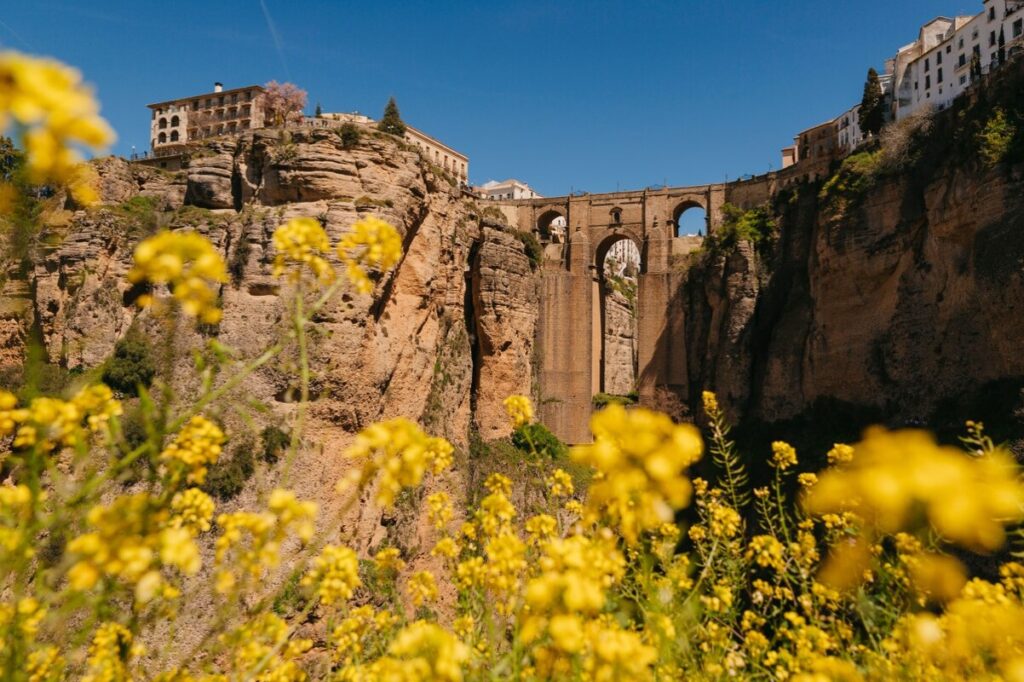

Perched above a gorge so dramatic it feels like a dream someone forgot to wake from, Ronda is the kind of place that changes the way you see Spain entirely.
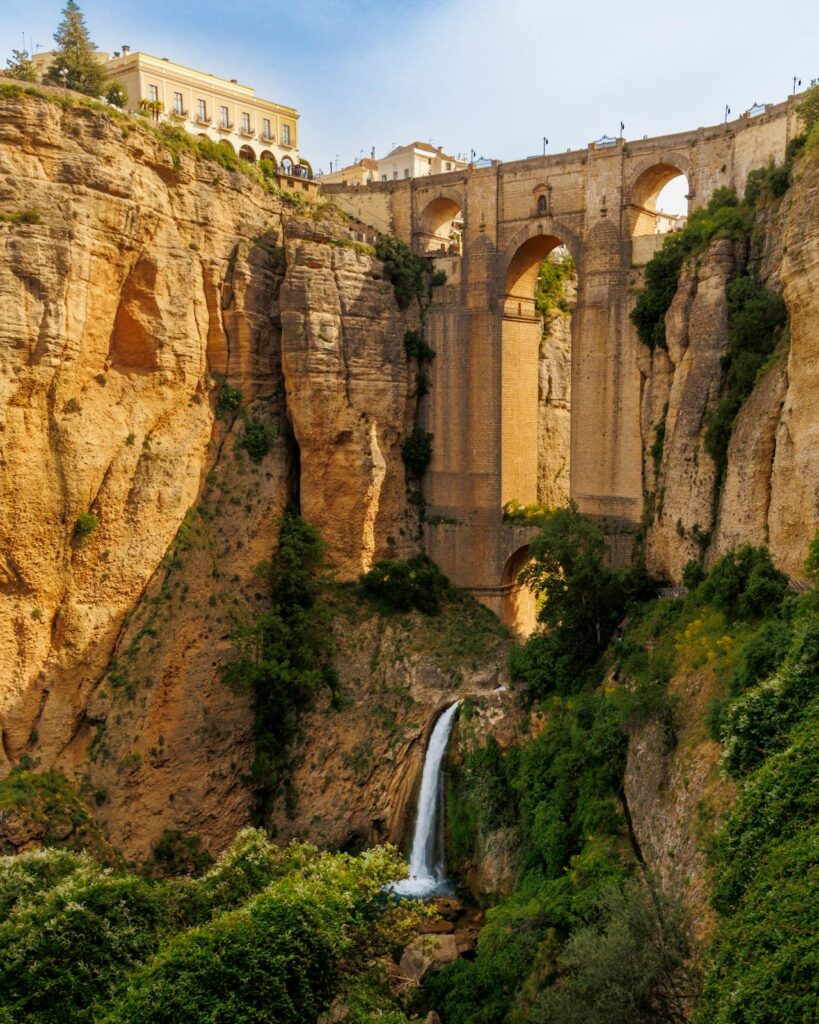
Few towns command their landscape with quite the authority of Ronda. Divided by the sheer walls of the El Tajo gorge, a 100-metre drop carved by the Guadalevín river, the town balances two worlds across its famous Puente Nuevo bridge: the ancient La Ciudad quarter with its Moorish baths and Arab house, and the newer Mercadillo district with its legendary bullring. Stone, sky, and silence conspire to make every view feel earned.
Beyond the gorge, Ronda is a town of intimate plazas, tiled courtyards, and surrounding countryside that most visitors never reach. The Serranía de Ronda, a landscape of oak forests, olive groves, and limestone peaks, offers a quiet that the coast has long since surrendered. This is slow travel in its most authentic form: Andalusia without the performance, with all of the depth.
Why visit this Spanish Town
- For those who crave drama and stillness in equal measure. The gorge views rival anything in Europe, yet the town remains genuinely unhurried.
- A natural base for exploring the Pueblos Blancos, the whitewashed villages of the Serranía, all within easy reach on winding country roads.
- Positioned perfectly between the Andalusian countryside and the coast. Marbella and Málaga are both under an hour away, making it an elegant alternative to staying on the shoreline.

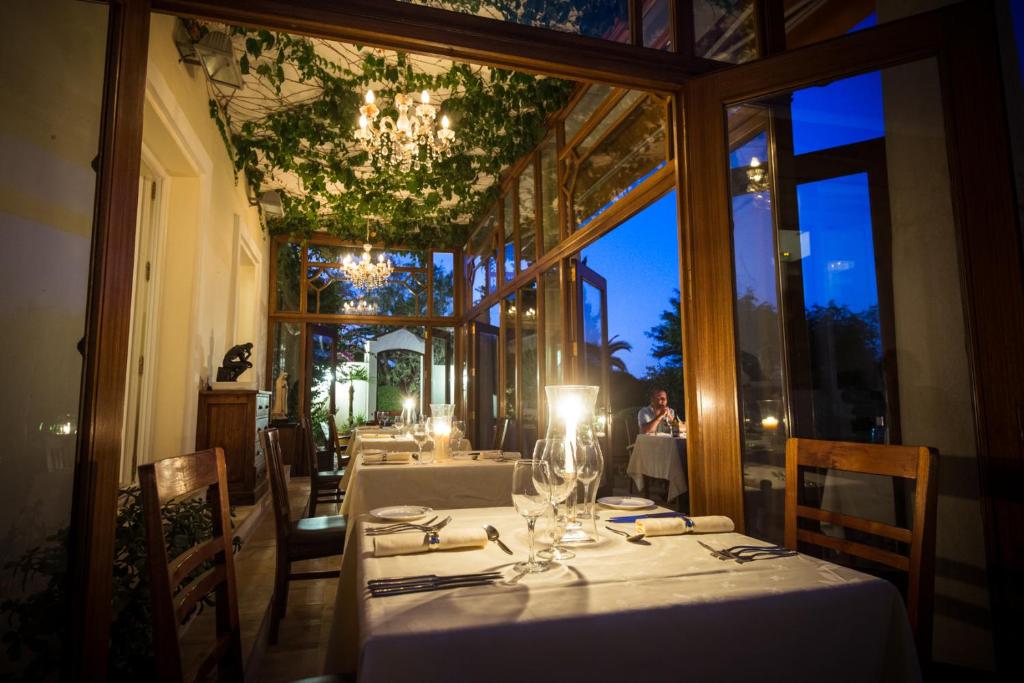
Hotel La Fuente de la Higuera is set among olive groves and gardens just outside Ronda’s old town, La Fuente de la Higuera is the kind of place you arrive at and quietly decide not to leave. A restored mill house with only a handful of rooms, it offers the understated elegance of a refined Andalusian country retreat: terracotta floors, handmade details, garden terraces where mornings unfold without urgency. It is made for those who come to Ronda not just to see, but to breathe. Close enough to the Serranía for long walks, close enough to the coast for an afternoon by the sea. When you are ready, we would be delighted to welcome you.
The Puente Nuevo bridge at golden hour, approached from the Camino de los Molinos path below. You will see the full span framed by gorge walls and fading Andalusian light.
April through June, or September through October. Spring brings wildflowers to the Serranía; autumn fills the air with harvest. Summers can be fierce, but the olive groves keep their coolness and the evenings are long and soft.
Albarracín, Aragon: One of the Most Beautiful Villages in Spain


Rust-red walls, a medieval skyline unchanged for centuries, and a river looping around its feet like a protective arm. Albarracín is one of the most beautiful villages in Spain, and most travellers still have not found it.
Built upon a crag of rose-coloured rock in the highlands of Teruel, Albarracín has the quality of a place outside time. Its overhanging timber houses, painted in faded ochres and terracottas, seem to grow from the cliff itself. The 10th-century Moorish walls, a full circuit threading across the ridge above town, still stand in one of the most photogenic silhouettes in the country.
The cobbled streets are steep, narrow, and entirely free of the crowds that gather elsewhere. In the evenings, when day-trippers depart and the amber streetlights come on, Albarracín settles into a genuinely medieval atmosphere: quiet, golden, impossibly intact. This is Aragonese Spain, austere in palette, generous in spirit, and deeply, unexpectedly moving.
Why visit this Spanish Town
- For architecture and photography. The combination of Moorish walls, Baroque facades, and rose-coloured natural rock is unlike anywhere else in the country.
- A destination for travellers who move against the current. Far from the tourist trail, yet entirely worth the detour through Aragon’s high plateau.
- Ideal in summer, when the altitude keeps temperatures pleasantly cool and the surrounding pine forests invite long, unhurried walks.
Sigüenza, Castile: The Prettiest Cathedral Town in Central Spain

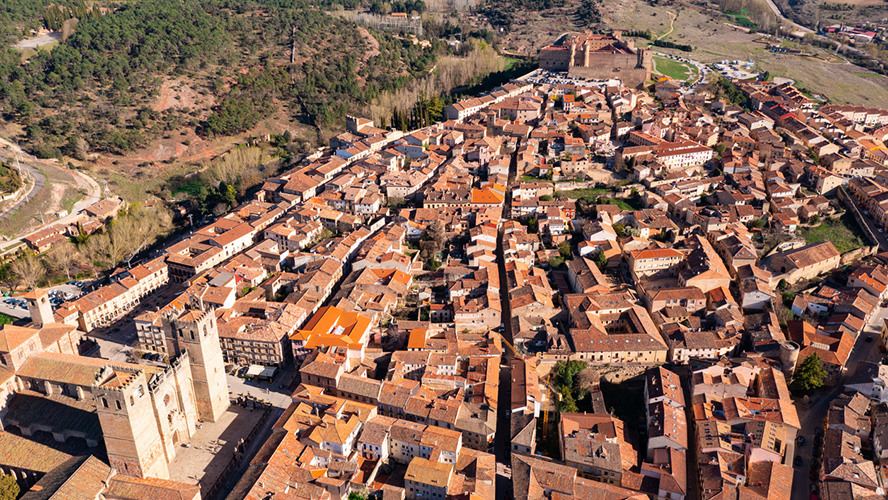
A cathedral city carved from golden limestone on the Castilian plain, severe, serene, and one of the most overlooked charming towns in Spain by travellers who rarely venture this far inland.
Sigüenza demands a certain patience, which it repays lavishly. Its 12th-century Romanesque cathedral, one of the finest in Spain, anchors a historic quarter of noble stone palaces, arcaded squares, and quiet lanes that feel unchanged since the Reconquista. The castle above the town, now a Parador, was fought over by Romans, Moors, and Christians in sequence. It surveys the Henares valley with the equanimity of something that has seen everything.
This is Castile in its purest form: vast skies, golden stone, the dry clarity of plateau air. There is no coastline, no white walls, no olive groves. Instead, Sigüenza offers solemnity, history, and an extraordinary quietness. The kind of town where a single afternoon in the cathedral nave can feel more restorative than a week somewhere louder.
Why visit this Spanish Town
- For history and architecture enthusiasts. The density of Romanesque and Gothic heritage in a single small town is extraordinary, and the cathedral alone warrants the journey.
- A destination for travellers seeking genuine Spanish quietude far from the resort belt. Sigüenza draws discerning visitors and almost no package tourists.
- An easy and rewarding overnight from Madrid, under 90 minutes by train, ideal for those who want to experience medieval Castile without a long drive.
Parador Castillo de Sigüenza is the medieval castle itself, converted into one of the most dramatic Parador properties in Spain. Stone corridors, baronial fireplaces, and rooms that look out over the Castilian plain from battlements that once changed hands in war.
The Plaza Mayor in late afternoon, with the cathedral’s west facade lit gold and the castle visible on the hill behind. The full sweep of Sigüenza’s medieval skyline in a single frame.
Spring and autumn, when the Castilian light is at its most golden and the temperatures on the plateau are kind. Winter brings sharp, clear skies and an almost cathedral-like silence over the entire town.
Besalú, Catalonia: A Perfectly Preserved Medieval Village in Girona


Cross its 12th-century fortified bridge and you step into a Catalan town so perfectly preserved that it takes a conscious effort to remember which century you are in.
Besalú’s fame rests on its bridge, and rightly so. The Romanesque structure, with its crenellated towers and arched spans over the Fluvià river, is among the most photographed medieval structures in Spain. But the town behind it is equally deserving: a compact historic quarter of Romanesque churches, a 12th-century Jewish quarter with its ritual baths (mikwe), and arcaded market squares that feel entirely uncontrived.
This is Catalan rural architecture at its finest: darker in stone than Castile, more austere in line than Andalusia, quietly magnificent in its own right. Day-trippers pass through on their way to the Costa Brava; those who stay discover a medieval atmosphere that lingers long after dinner and a Garrotxa landscape, volcanic, beech-forested, deeply green, that rewards exploration at its own pace.
Why visit this Spanish Town
- For lovers of medieval history. The density of Romanesque heritage within a few city blocks is extraordinary even by Catalan standards, and the Jewish quarter is among the best-preserved in the country.
- An ideal base for the Garrotxa Volcanic Zone Natural Park, one of the most unusual and beautiful landscapes in Spain.
- Works beautifully as a two-night stop combining Besalú with Girona, just 45 minutes away and one of Spain’s most complete medieval cities.
Els Jardins de la Martana is a converted manor house on the edge of the old town, with individually decorated rooms, a garden terrace overlooking the river, and the kind of proprietorial care that makes small Catalan hotels genuinely special.
The south bank of the Fluvià at sunrise. Frame the entire bridge with the church tower rising behind it and the morning mist lifting off the river in long, slow ribbons.
Spring and autumn, when the Garrotxa’s beech forests turn gold and green in turns. The Medieval Market in November transforms Besalú for one extraordinary weekend, filling the bridge and squares with the kind of atmosphere money usually cannot buy.
How to choose the right town for your trip
Among the prettiest towns in Spain, no two offer the same experience. The question is not whether you will find beauty. It is which kind calls to you. A few considerations to help you decide:
- Coast or inland? Cudillero, Combarro, and Hondarribia offer the drama of sea, harbour, and salt air. Ronda, Albarracín, and Sigüenza offer altitude, silence, and architecture shaped by centuries of inland life. Besalú sits contentedly between the two.
- North or south? Andalusia gives you heat, whitewash, and the deep Mediterranean sensibility of the south. Green Spain (Cudillero, Combarro, Hondarribia) offers cooler air, Atlantic wildness, and a quieter, more introspective mood. Castile and Aragon are something older and more austere, and all the more memorable for it.
- Quiet or lively? Combarro and Albarracín are deeply peaceful, even in high season. Hondarribia has a vibrant food and social culture without sacrificing its character. Sigüenza offers the particular stillness of a cathedral city: profound, unhurried, entirely its own.
- First visit to Spain? Ronda offers the full Andalusian experience: gorge, history, countryside, and proximity to the coast, with the depth to reward several days of slow exploration.
- Off the beaten path? Combarro in Galicia and Albarracín in Aragon are the least-visited towns on this list of most beautiful villages in Spain, and perhaps the most rewarding for exactly that reason.
- Pairing towns? Hondarribia and Besalú share a northern sensibility and suit those drawn to medieval Spain and serious food. Cudillero and Combarro sit on the same Atlantic coast. Ronda and Sigüenza reward those who want to move between Spain’s two great interior landscapes: Andalusia and Castile.
The prettiest towns in Spain are not simply places on a map. They are accumulations of light, stone, salt air, and slow time. Places that ask something of you in return for what they offer: the willingness to arrive without a schedule, to take the longer road, to sit with a coffee long after it has been drunk and watch the shadows move across the walls.
Spain’s most beautiful villages have been waiting, patiently, for travellers patient enough to find them. These seven are a beginning. And if Ronda is where your journey starts, among olive groves, mountain air, and the quiet of the Serranía, you may find that it is also, very often, where the rest of the world begins to feel very far away indeed.
When you are ready, we would be delighted to welcome you.