This is not a detail we take lightly.
La Fuente de la Higuera was built within a restored 18th-century olive mill. The land here has always known olives. And so producing our own oil feels less like a project and more like a continuation of something that was already here long before us.
A considered harvest
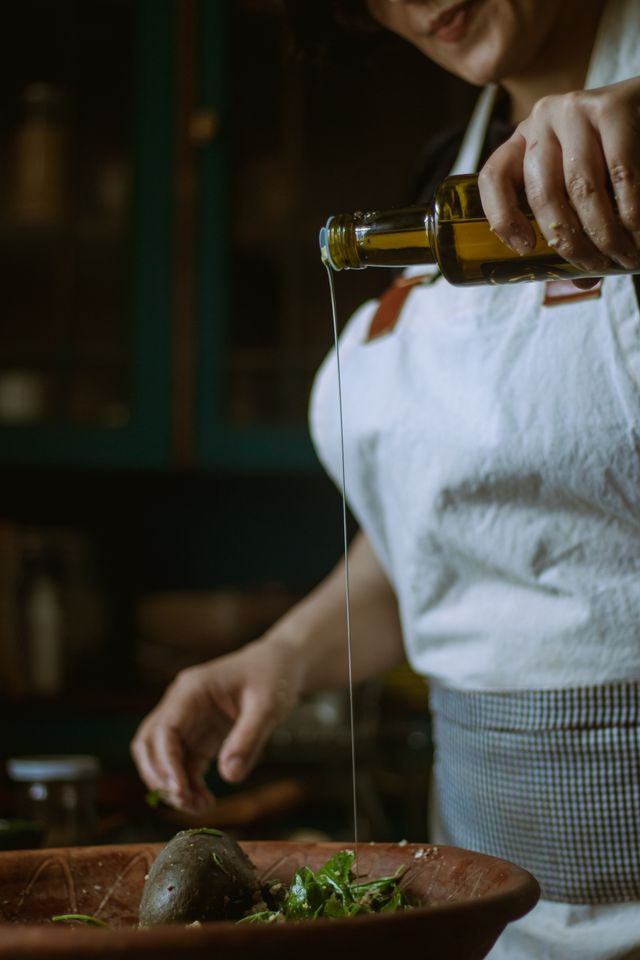
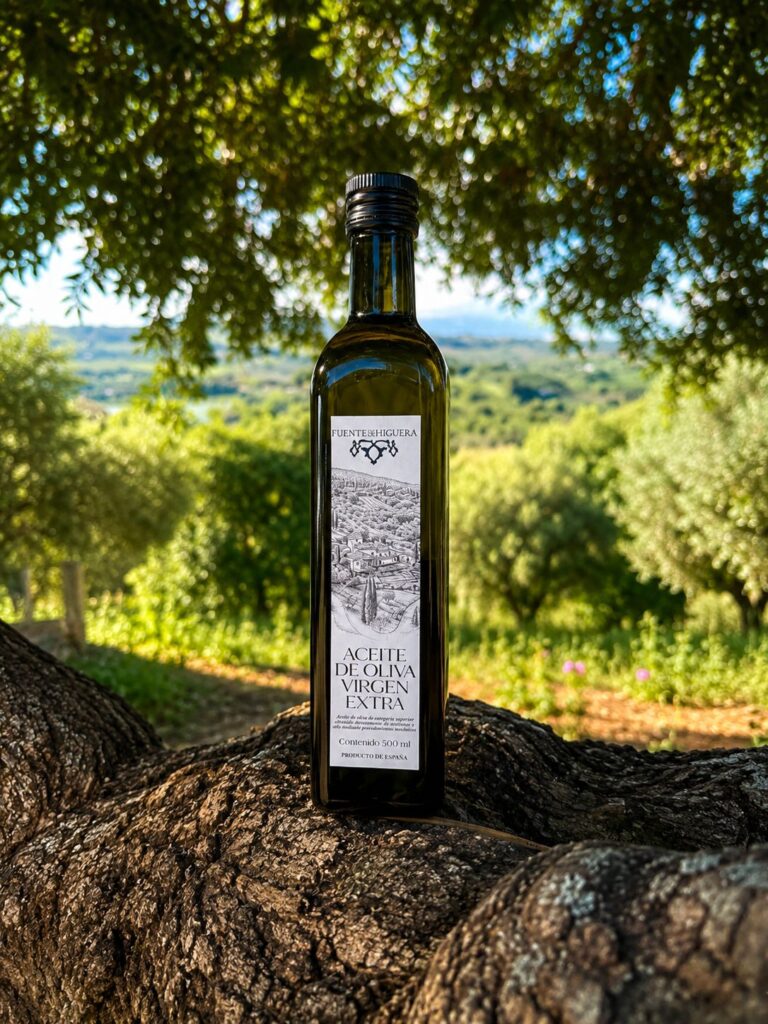
Our groves are planted mostly with lechin, a variety native to the Serranía de Ronda, well suited to this land and its winters. This year, we chose to gather the olives early, in the second week of November. An early harvest means a smaller yield. It also means oil of finer quality, with a more delicate character and greater depth. A decision made in favour of the table rather than the quantity.
Once the branches are beaten and the fruit gathered, it is carefully selected before travelling to Molino Don Feliz. There, the olives are destemmed and cold-pressed, without heat or additives, to produce the oil in its purest form.
The oil that runs through everything
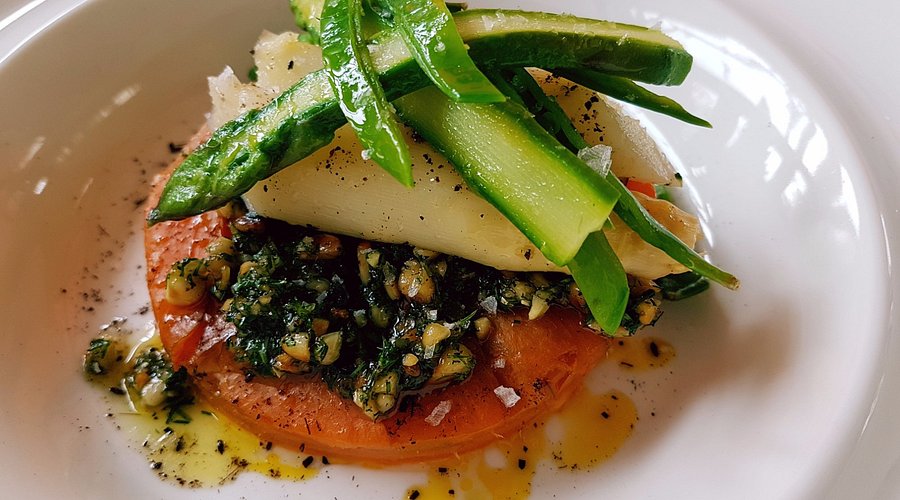
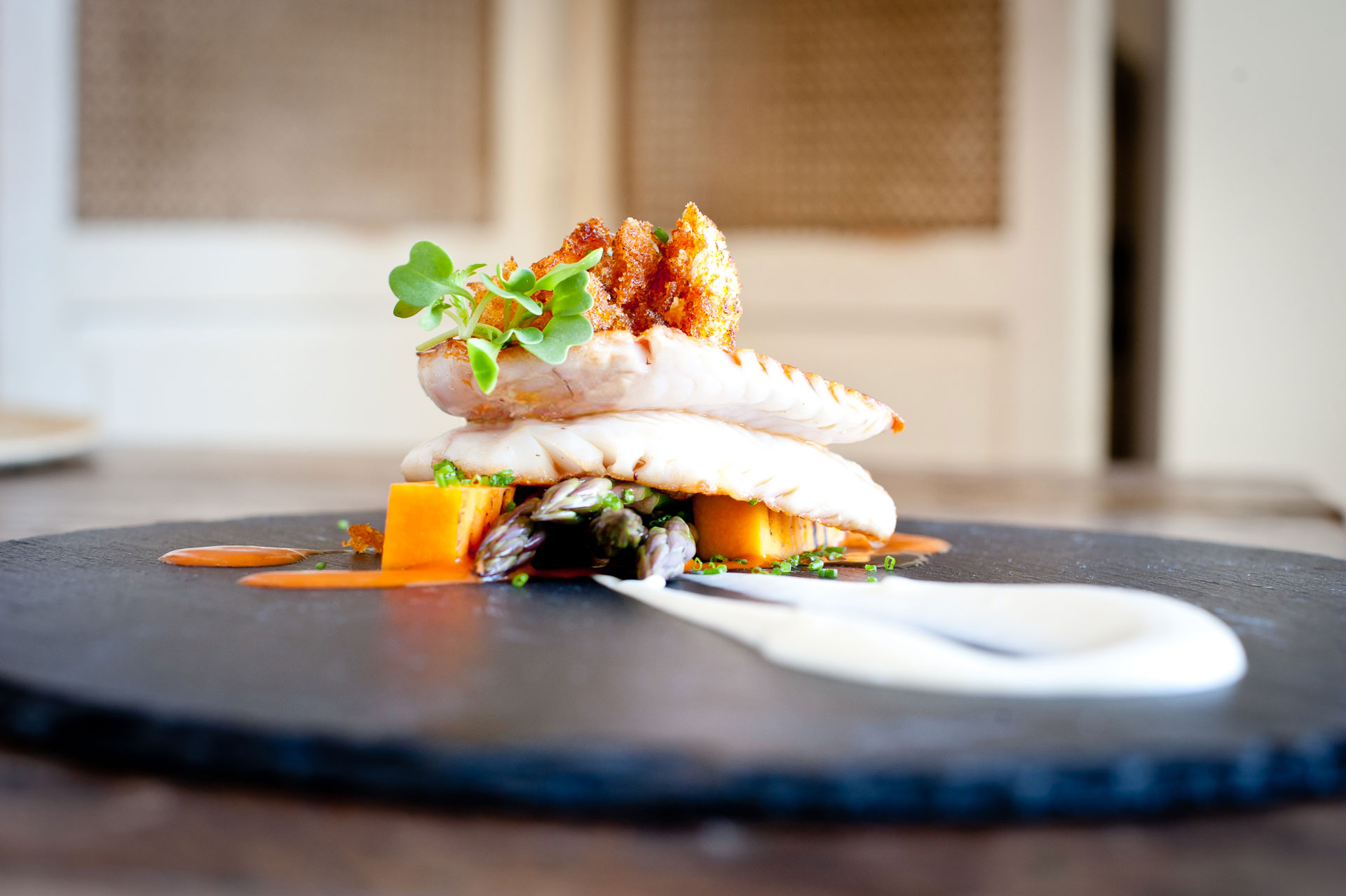
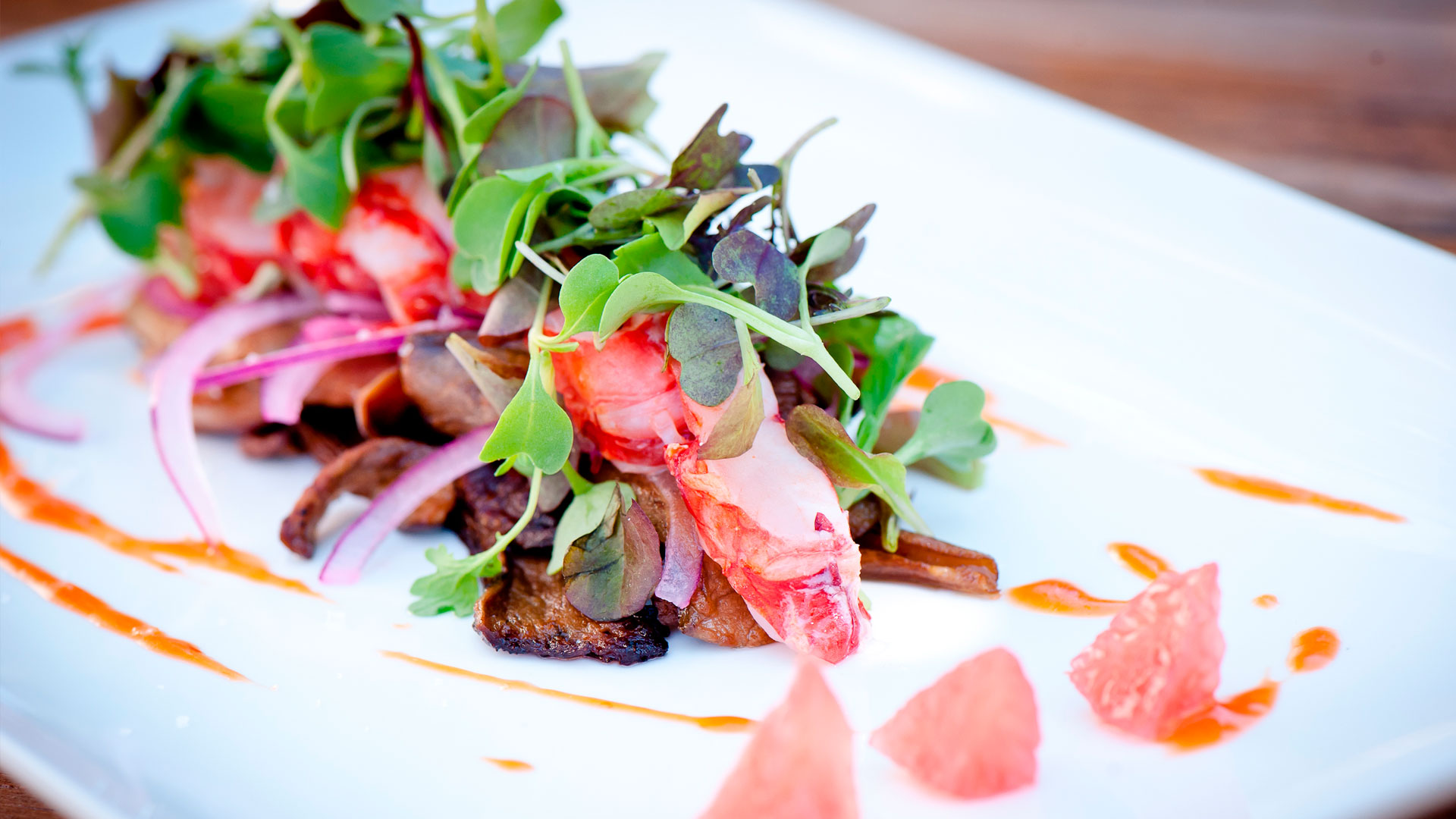
It is the only oil we use. From the morning bread at breakfast to the evening plates on the terrace, every dressing and every finish carries something of this land.
The menu changes every evening, as it has for twenty-five years. No guest repeats a dish, however long their stay. What arrives on the plate depends on what the garden is offering that day, what is at its best, and what our chefs feel compelled to do with it. That daily freedom is part of how this kitchen works.
In winter, the garden gives us chard, spinach, broad beans, cauliflower, beetroot, cavolo nero, different lettuces and fresh herbs, each one cut that morning and carried straight to the kitchen. In summer, it shifts entirely: tomatoes in several varieties, peppers, aubergines, courgettes, cucumbers, green beans, spring onions, melons and watermelons, herbs that bring freshness and character to every plate. Different light, different flavours, the same oil running through all of it.
Below are three dishes that show what that means at the table.
Slow-cooked beef cheek, glazed, with spiced sweet potato
The cheek is browned gently and then left to cook low and slow for several hours, until the meat yields completely. It is finished with a glaze that deepens as it rests, served alongside sweet potato roasted with warm spices. A thread of our oil, added at the end, brings everything into focus. The kind of dish that speaks of patience.
Bluefin tuna tartare with pistachio ajoblanco
The ajoblanco is a cold Andalusian preparation, traditionally made with almonds, bread and garlic. Here the kitchen makes it with pistachios, softening the flavour and adding a faint sweetness that pairs naturally with the tuna. The fish is dressed simply, our oil among the first things to touch it. Cool, clean, quietly complex.
Courgette carpaccio with roasted tomatoes, coriander shoots and grilled sardine
The courgettes come from the kitchen garden, sliced thin and laid out with roasted tomatoes and a handful of fresh coriander shoots. The sardine is grilled over high heat, just long enough to char slightly at the edges. Our oil finishes the plate, carrying the flavour of the garden into every bite. A dish that could only come from here.
An evening at the table
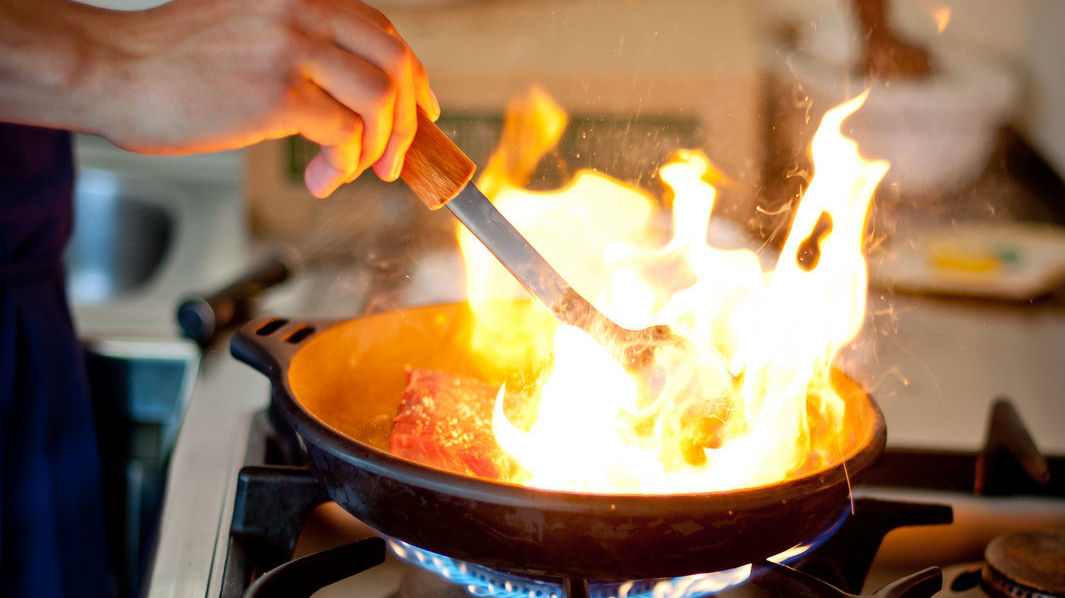
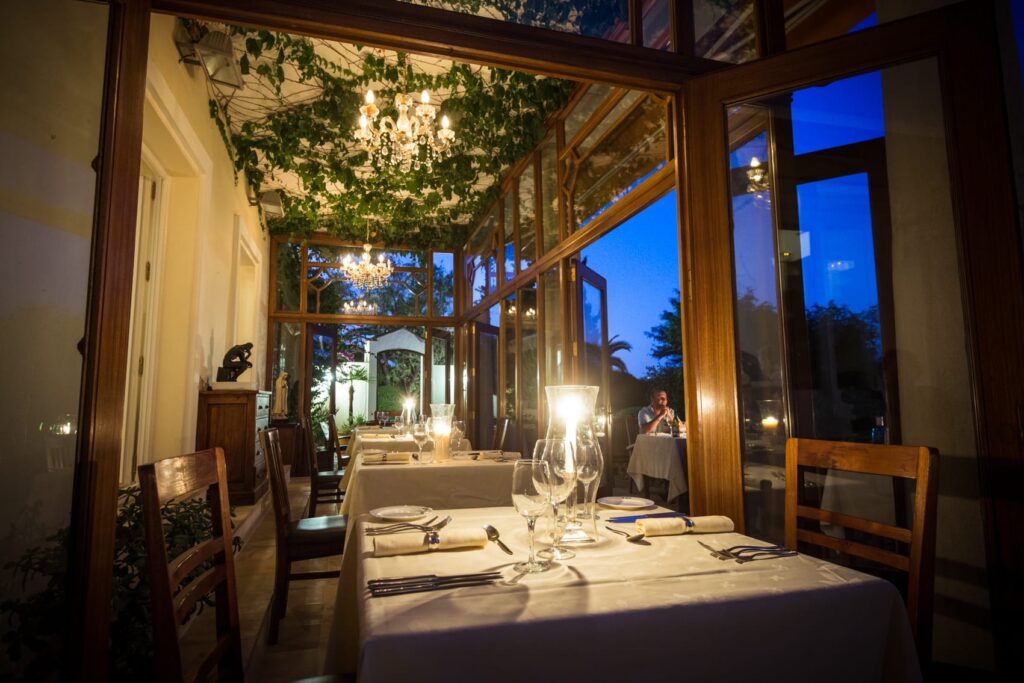
Each morning, we share the evening’s menu with our guests: a choice of two starters, three main courses with a vegetarian option, and two desserts. Guests choose before four in the afternoon, so that by the time the sun sets over the valley, everything is ready.
The table is set on the terrace, among the orange and lemon trees, magnolia and jasmine, under the Andalusian sky. The pace is slow. Our chefs have brought their craft from Michelin-starred kitchens, though what you find here is something warmer than precision alone.
It is the kind of dinner you linger over. One that begins with bread and our own oil, and ends without quite wanting it to.
The oil, the garden, the table under the stars. It all makes more sense when you are here. We look forward to welcoming you to Ronda.